
Every autumn a lot of Nashville homeowners stand at the bottom of a ladder doing this arithmetic: a gutter cleaning costs a couple of hundred dollars, and a ladder costs about the same and lasts years. It is a fair question, and the honest answer is that for some houses DIY genuinely makes sense — and for others it is the most expensive way to save money available to a homeowner.

When DIY Genuinely Makes Sense
- Single-story with a walkable roof pitch. If you can work from a stable ladder on level ground and never need to be higher than about ten feet, the risk profile is reasonable.
- Light debris load. An open lot with few overhanging trees is a thirty-minute job, not a project.
- You already own decent equipment — a fiberglass extension ladder, standoff stabilizer, gloves and a scoop. Buying all of it for one job erases the savings in year one.
- You are physically comfortable on a ladder and have someone home while you do it.
When It Is a Bad Trade
- Two stories or more. This is the line for us. Falls from height are the single largest category of home-maintenance injury, and a two-story Nashville roofline puts you fifteen to twenty feet up on a ladder you are repositioning twenty times.
- Steep pitch, or any need to get on the roof. Asphalt in Middle Tennessee heat is soft, and a slip on a 7/12 pitch does not have a good ending.
- Sloped or soft ground. Most ladder accidents are the ladder moving, not the person falling off a stable one. Half the yards in Brentwood and Belle Meade are on grade.
- Guarded systems. Removing and refitting guards from a ladder is awkward, and bent panels cost more than the cleaning would have.
- You cannot see what you are cleaning. Reaching blindly over an edge gets the visible debris and misses the outlet, which is the part that actually matters.
The Costs Nobody Counts
The comparison people usually make is $200 for a service against $0 for doing it yourself. The real comparison looks different.
These ranges reflect typical Middle Tennessee homes and are a guide only, not a quote. The firm number comes after we have looked at the roofline.
- Equipment — a decent extension ladder and stabilizer is $250 to $500.
- Time — three to five hours for a typical two-story house, twice a year.
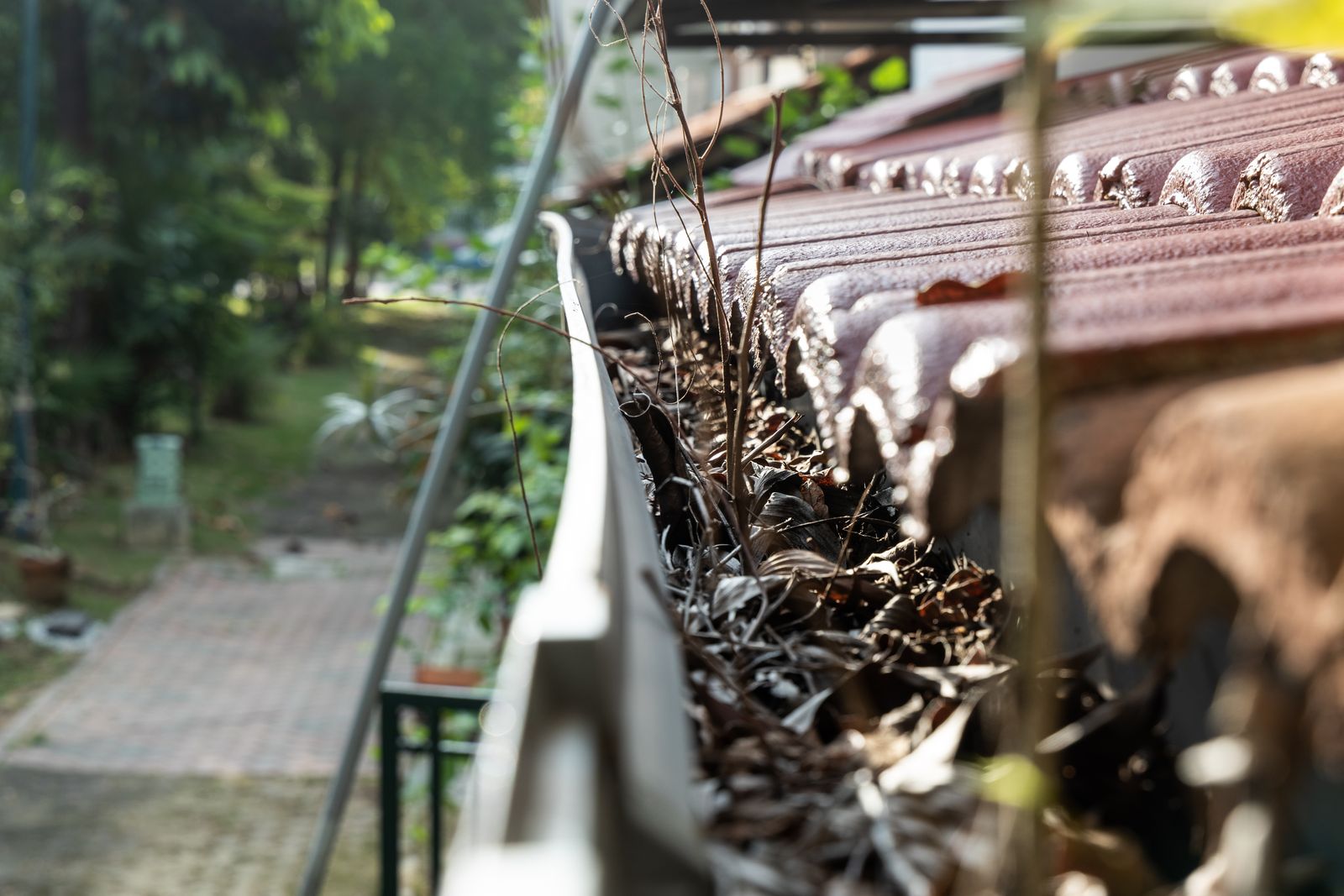
- The things you will not check — seam condition, hanger tightness, fascia rot, downspout flow at the discharge end. A service visit is partly an inspection, and most DIY visits are not.
- Damage risk — leaning a ladder on the gutter itself is the most common cause of the dented, out-of-pitch sections we get called to repair.
- The fall — the one that does not average out. This is the actual argument, and it is why we are blunt about the two-story line.
The Middle Option Most People Miss
You do not have to choose all-or-nothing. Plenty of our customers do the reachable single-story runs themselves in spring and have us do the full house once in late fall, when the load is heaviest and the ladder work is worst. That halves the cost without putting anyone on a ladder in December.
If you do go up yourself, the one thing worth doing properly is verifying the downspout actually runs at the discharge end rather than assuming water in the top means the line is clear. More on that on our downspout cleaning page.
DIY vs. Professional FAQs
Is it actually dangerous, or is that a sales pitch?
Falls from ladders are a genuinely large category of home-injury admissions, and the risk is concentrated in exactly the situation gutter cleaning creates — repositioning a ladder repeatedly, on uneven ground, while carrying something. On a single story we think DIY is reasonable. At two stories we would not do it ourselves without proper equipment.
How long does it take to do it myself?
Three to five hours for a typical two-story Nashville home with mature trees, including setup, repositioning and cleanup. Single-story with light debris can be under an hour.
What equipment do I actually need?
A fiberglass extension ladder rated for your weight plus tools, a standoff stabilizer so the ladder never rests on the gutter, gloves, a scoop, and a hose. The stabilizer is the part people skip and the reason we see so many dented gutters.
Can I just blow them out with a leaf blower?
On dry, light debris, partially. It does not touch a compacted downspout outlet, which is usually the actual problem, and it puts you at the top of a ladder holding a running machine with one hand.
Will doing it myself void anything?
Not on the gutters. But if you have gutter guards under warranty, removing and refitting them yourself can affect that — worth reading the paperwork before you start.
What does a professional visit include that I would not do?
Checking seams and end caps, hanger tightness, fascia condition behind the gutter, pitch, and verifying downspout flow at the discharge rather than the inlet. The cleaning is the easy part; the inspection is most of the value.
Not Sure Which Side of the Line You Are On?
Call or text (615) 265-1914 or send the form — same-day response. Tell us your roof height and tree cover and we will tell you honestly whether it is worth paying us. See what it costs first if you want the numbers.