
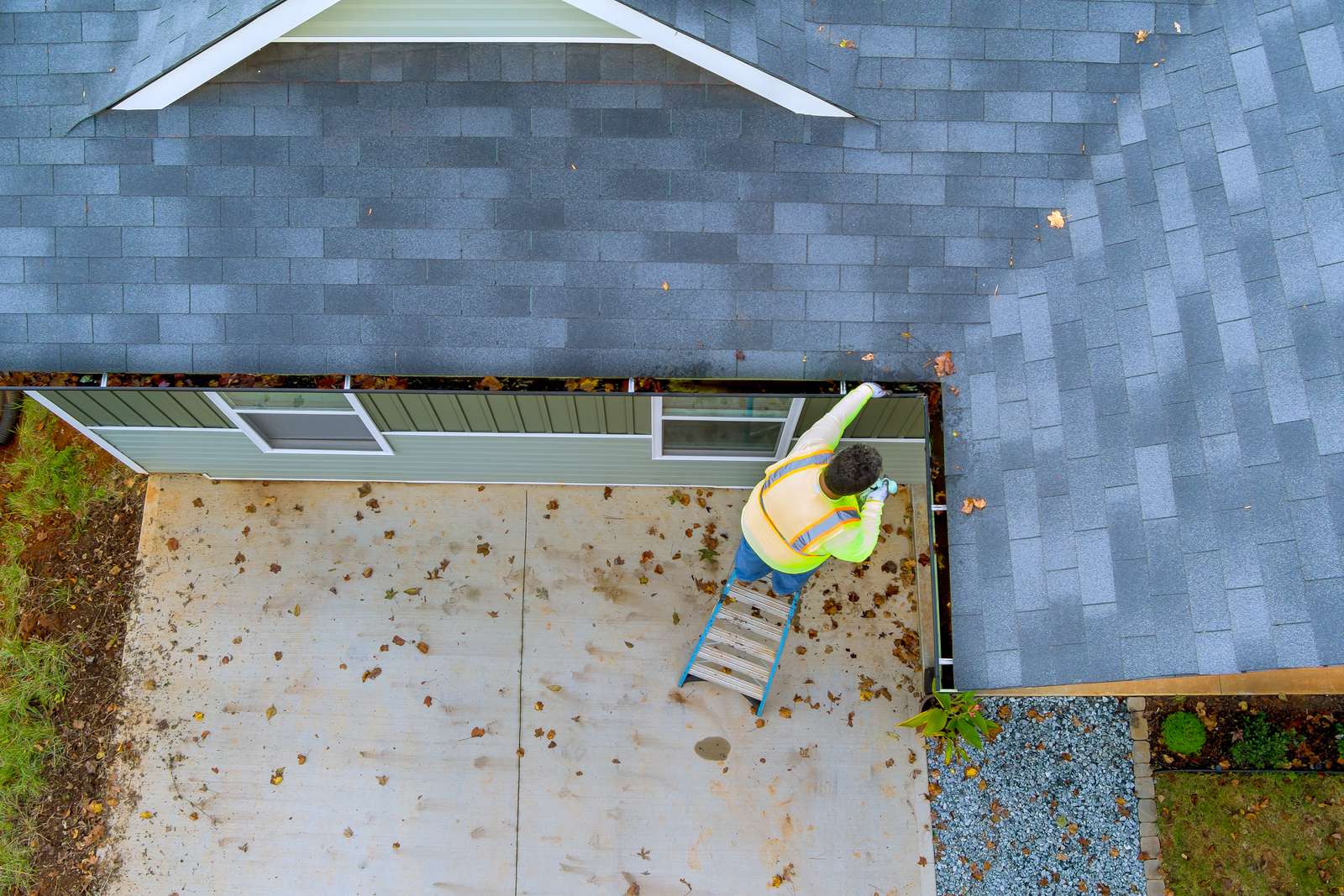
On a commercial building, a clogged gutter isn’t a chore — it’s a liability line item. Overflow ices entrance walks, stains facades, floods tenant space, and ponds on flat roofs. We keep gutters, box gutters, scuppers, and drains flowing on commercial properties across the Nashville metro, with the paperwork your property manager actually needs.
✓ COI on request ✓ Photo + condition report every visit ✓ Off-hours scheduling
Who We Work With
Property managers and HOAs from Murfreesboro to Hendersonville, office and medical buildings, retail centers along Nolensville Pike and Charlotte Ave, churches across Middle Tennessee (steep rooflines and box gutters are our normal), multifamily communities in Antioch and Smyrna, and restaurants and venues where one blocked scupper can close a patio on a Friday night.
Commercial Is a Different Job
Box gutters carry years of sediment. Wide commercial box gutters hide enormous debris loads and fail invisibly — the first symptom is usually water inside the parapet wall.
Flat roofs live and die by their scuppers. Nashville’s burst rains pond a flat roof within minutes of a blocked outlet, and standing water is the fastest way to kill a membrane and its warranty. Every scupper, conductor head, and accessible drain gets cleared and water-tested.
Insurance is non-negotiable. Roof work on commercial property needs a vendor who can hand your management company a certificate of insurance before anyone climbs — we do.
Tenants set the clock. Early mornings, weekends, quiet hours — we schedule around your building’s traffic, cone the work zones, and keep entrances open.
What Every Visit Includes
Hand-clearing of all gutters and box gutters, scuppers and drain outlets cleared and flow-tested, every leader and downspout flushed to grade, all debris hauled off site, and before/after photos with a short written condition note — seam gaps, rust-through, ponding zones, loose hangers — so your maintenance budget sees small problems before they become capital projects.
Scheduling that fits Nashville’s weather: minimum twice yearly (late fall after leaf drop, spring before storm season), quarterly under tree cover, and post-storm scupper checks for contract clients — one branch over an outlet is all it takes to pond a roof.
What Deferred Maintenance Actually Costs
One slip claim beats a decade of cleanings. Overflow across an entry walk refreezes on cold Nashville mornings; the liability exposure from a single fall dwarfs the entire annual maintenance budget.
Tenant damage arrives silently. Water tracking behind a parapet or through a window head runs for months before a tenant reports the stain — and by then it’s drywall, flooring, and a rent-abatement conversation.
Membrane roofs don’t forgive ponding. A blocked scupper puts standing water on the roof the same afternoon; repeated ponding cooks the membrane and gives the manufacturer a reason to void the warranty.
Box gutter rebuilds are capital projects. The structure a box gutter sits in rots from the inside when it overflows inward — rebuilding costs multiples of every cleaning the building will ever need.
The pattern is the same in every case: the cheap intervention is the scheduled one.
How Commercial Work Is Priced
Commercial gutter work is quoted per property rather than from a residential list, because linear footage tells you very little about how long the job takes. What actually drives the number:
- Roof height and access. A single-story strip center and a three-story office building are different jobs at the same linear footage. Anything needing a lift is priced accordingly.
- Roof type. Flat and low-slope commercial roofs with internal drains and scuppers are a different scope from a pitched roof with conventional gutters.
- Debris load and interval. A property on a quarterly schedule never reaches the hard stage; one that has been ignored for three years is a first-visit project and then a maintenance contract.
- Access windows. Work that has to happen outside business hours or around tenants costs more than an open Saturday.
- Documentation requirements. Photo reports, per-building breakdowns and COI paperwork are included, but they take time and they are part of the quote.
Scheduling Around a Working Property
Most of our commercial work happens early morning or on weekends, because ladders and falling debris near an active entrance are a liability nobody needs. For multi-tenant properties we sequence building by building and keep entrances clear rather than closing the site down.
Property managers generally want three things from us: that we show up on the scheduled date without being chased, that we send photo documentation of each building afterward, and that the certificate of insurance is on file before the first visit. All three are standard, not extras.
Scheduled maintenance is meaningfully cheaper per visit than reactive calls, and it moves gutters off the punch list entirely — which is usually the actual thing being bought.
Where We Draw the Line
- We do not work without a COI on file. That protects the property more than it protects us.
- We do not take on properties we cannot staff on schedule. If your frequency does not fit, we will say so rather than miss visits.
- We do not do roof repairs or membrane work. We clear, we document, we flag. Repairs are a roofing contractor.
- We do not quote sight-unseen on multi-building sites. Anyone who does is guessing, and the number will change once they arrive.
Commercial Gutter Cleaning FAQs
Can you provide a COI naming our management company?
Yes, before work begins, named as your contract requires.
Can you work without disturbing tenants or customers?
That’s the default — off-hours windows, coned zones, clear entrances, no surprises.
Do you handle flat roofs and internal drains?
Scuppers, conductor heads, and accessible drain outlets, yes — cleared and water-tested. Blockages deeper in buried storm lines get precisely located and documented for your plumber.
How do you price commercial work?
Linear footage, height and access, and debris load — walk-through or satellite scope first, firm written number, better rates on recurring contracts.
Do you do maintenance contracts?
Most of our commercial work is standing spring/fall or quarterly schedules with priority storm response. One less thing on the facilities list.
Do you carry insurance and provide a COI?
Yes, naming your entity, before the first visit. We send it without being chased.
Can you work outside business hours?
Yes, and for most properties we prefer it. Early morning and weekend work avoids ladders and falling debris near active entrances.
Do you provide documentation for each visit?
Yes — photo documentation per building, plus a note of anything we flagged. Property managers generally need it for their own records and we build it into the schedule.
What is a sensible interval for a commercial property?
Quarterly for anything with mature trees on or near the site; twice a year for open properties. Properties on a schedule never reach the expensive stage.
Do you handle flat roofs with internal drains and scuppers?
Yes, and they need attention more than pitched roofs do — a blocked internal drain ponds water on the membrane, which is a far more expensive problem than an overflowing gutter.
Can you handle a portfolio of several properties?
Yes, and it is cheaper per site than booking them individually. One schedule, one point of contact, one invoice if that is easier for you.
Take Gutters Off the Punch List
Firm quote, COI, documentation — handled. Call or text (615) 265-1914 or send the form. Related: residential gutter cleaning.